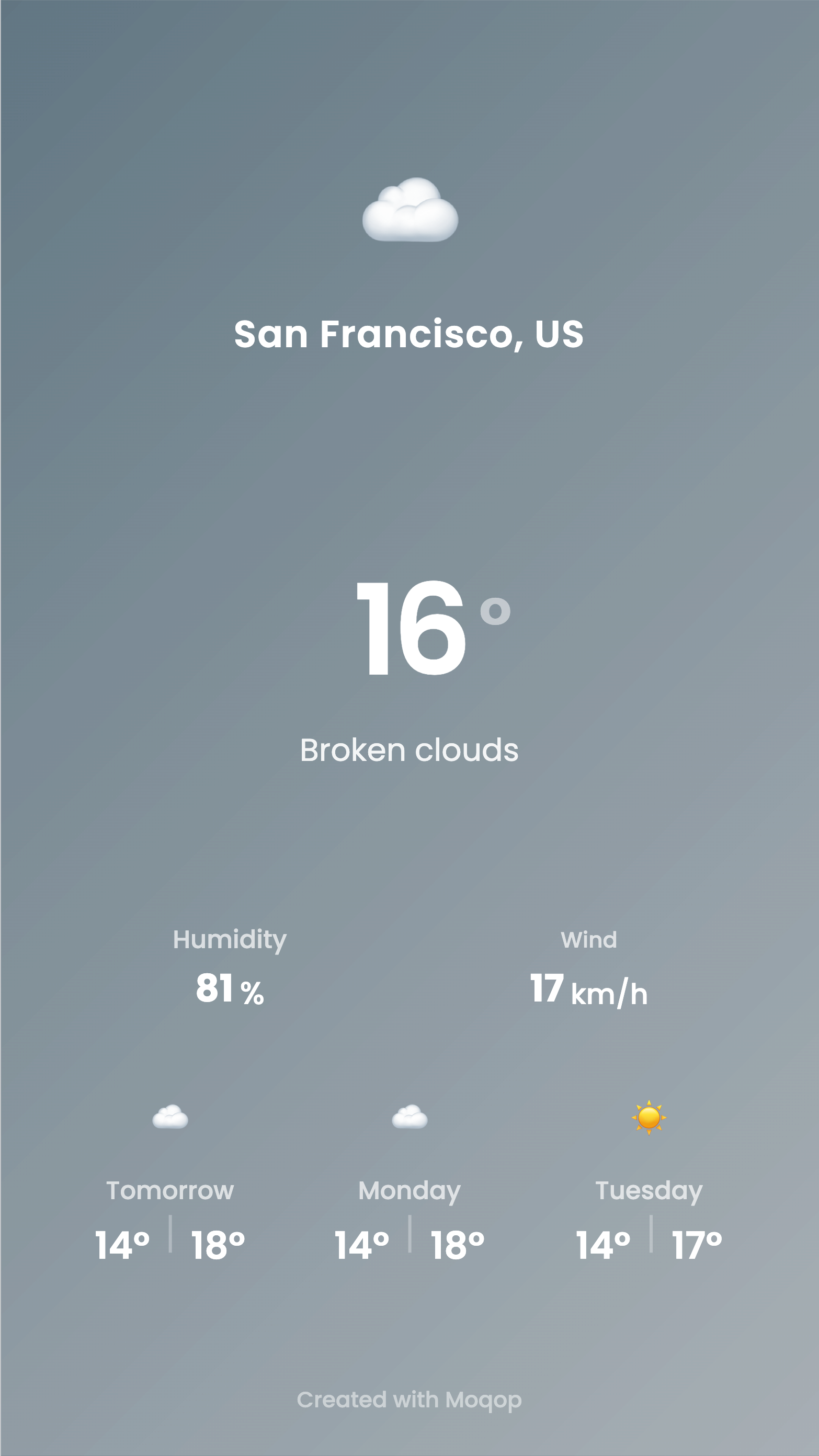
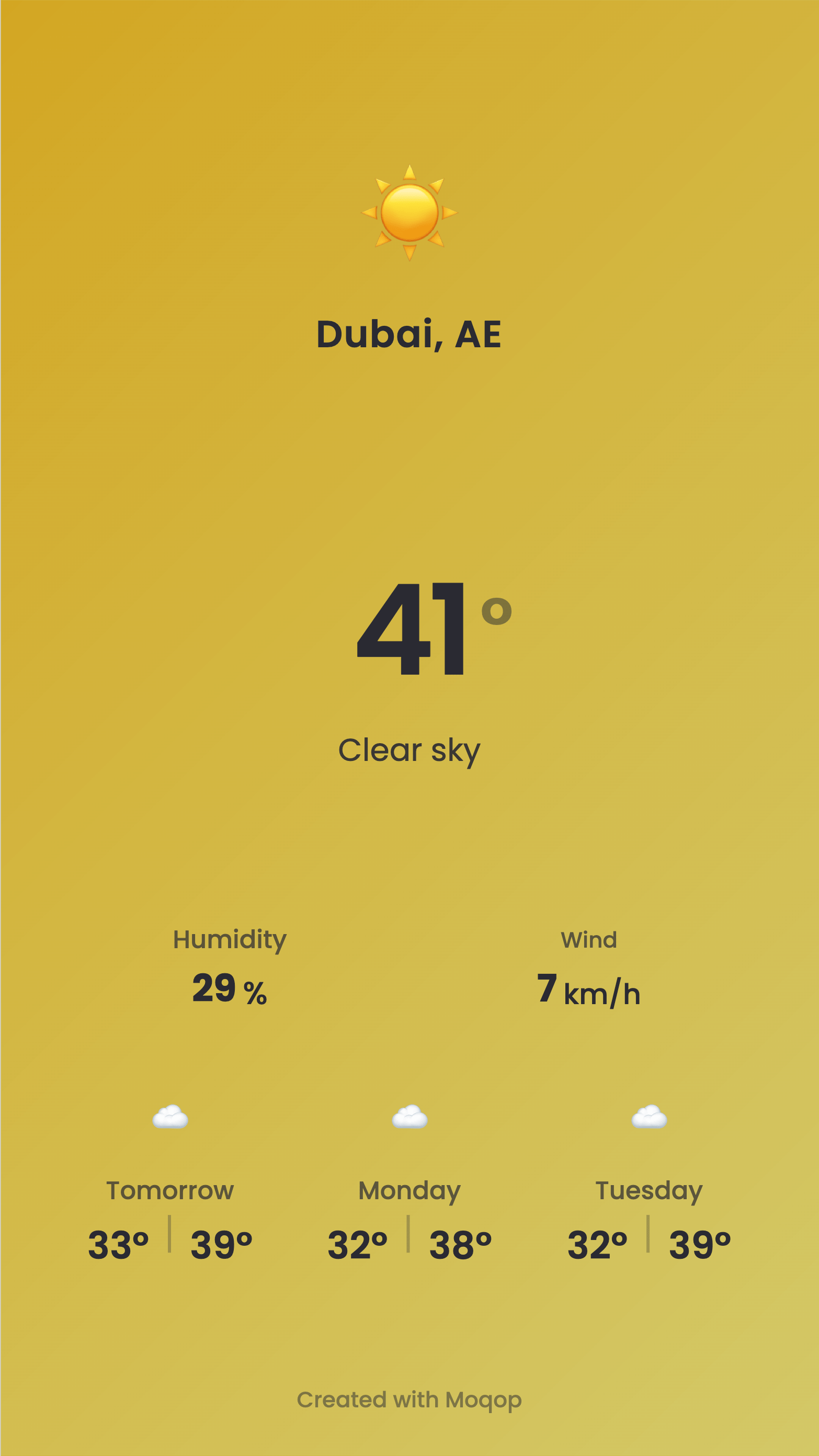
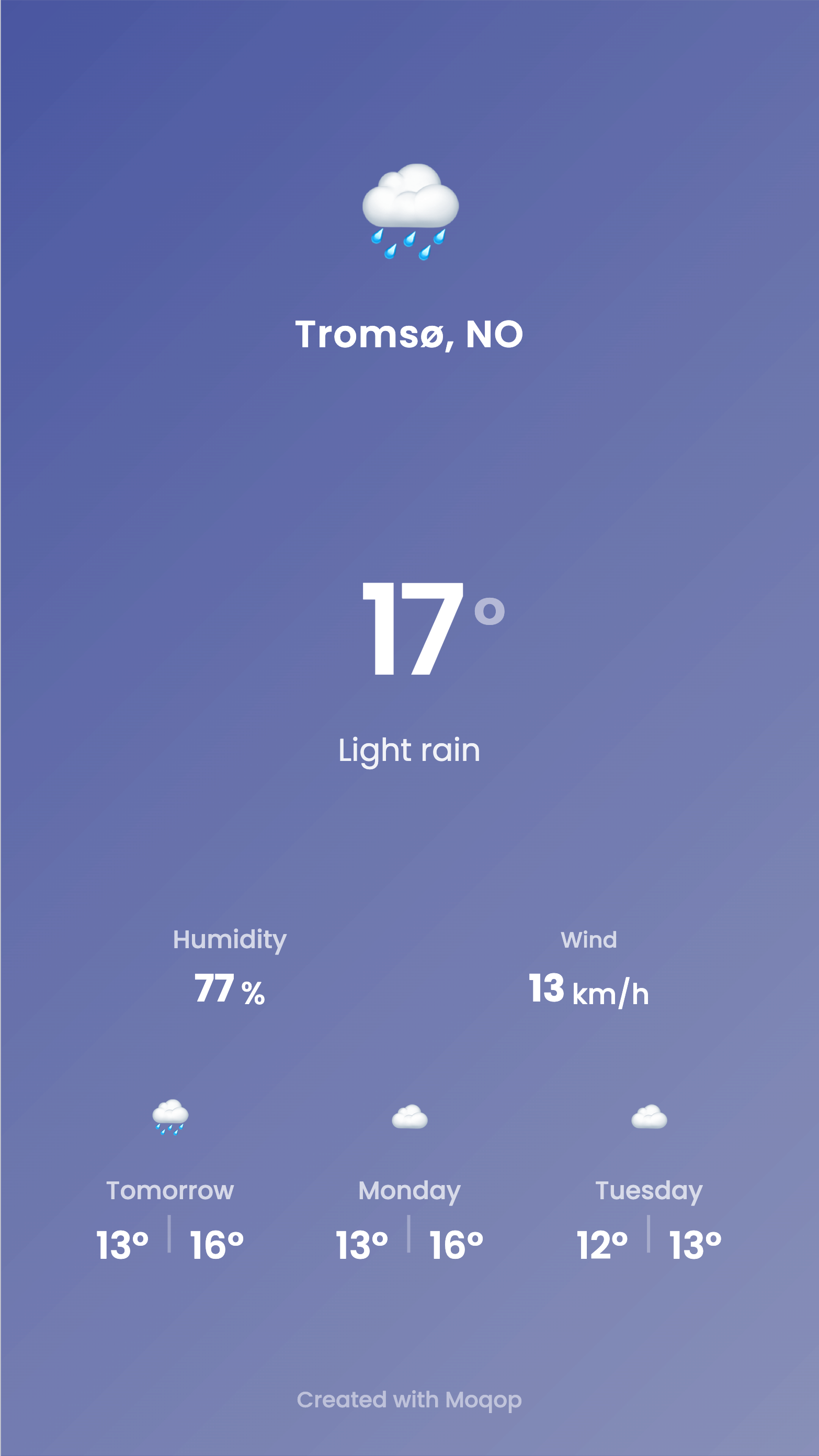
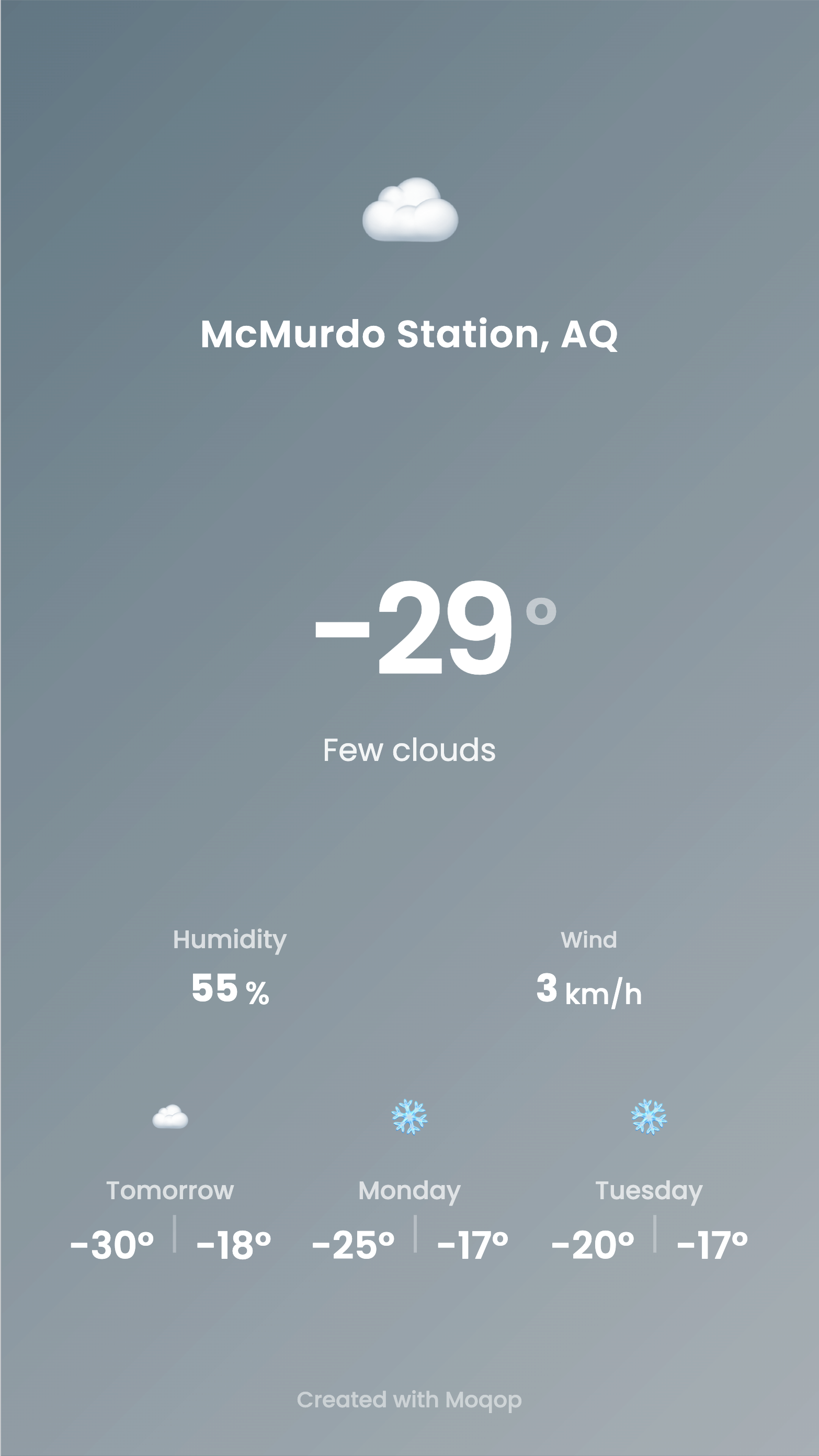
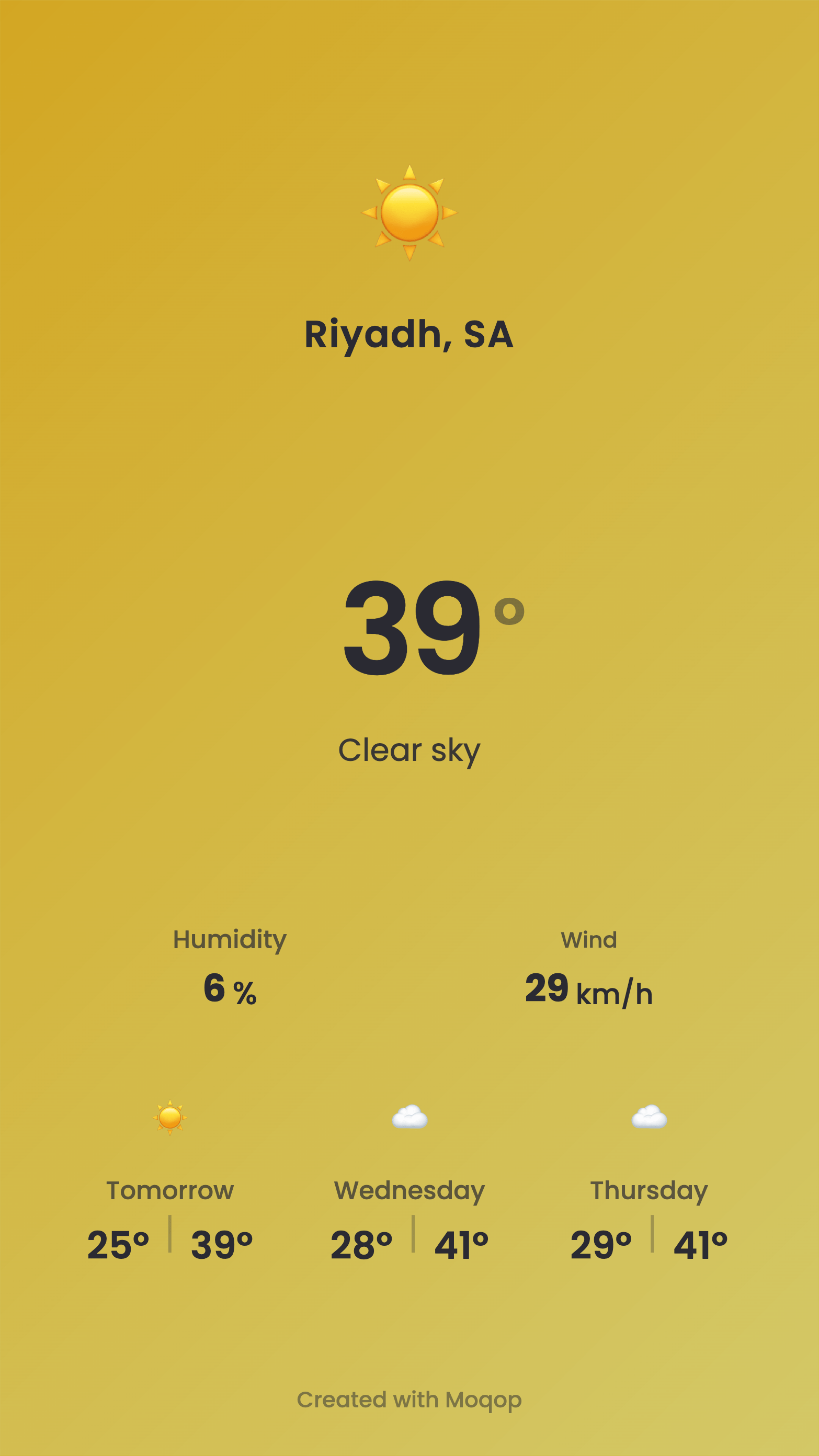
A daily forecast post can get repetitive fast unless it's built around who's actually looking at it and why.
By audience
Travel accounts — destination forecasts for trip planning, packing suggestions based on conditions, and climate comparisons between home and where you're headed.
Local pages — a daily update people actually check, plus event and activity suitability (is it a beach day, is a hike safe today).
Fitness creators — running or outdoor workout conditions: temperature, humidity, wind—the details that actually affect a session.
Event organizers — a heads-up for attendees on what to expect, and backup plans when the forecast calls for it.
Formats worth trying
Comparisons — home versus destination, this week versus last, today versus tomorrow. A comparison gives a forecast more reason to exist than a bare number does.
Activity-specific — UV index and water temperature for a beach day, wind and visibility for a hike, rather than a generic five-day overview.
Producing it
- Open moqop.com/app/weather-to-instagram
- Search the location
- Choose the forecast length—today, 3-day, or 5-day
- Pick a format (Story or Square) and units
- Export and post
What makes weather content worth posting
On its own, a forecast is just data. It becomes worth posting when it's tied to something the audience actually cares about—what to pack, whether an event is on, whether it's a good day to run. Add that context in the caption, and a routine forecast post turns into something people actually engage with instead of scrolling past.
Try Weather to Instagram
template now